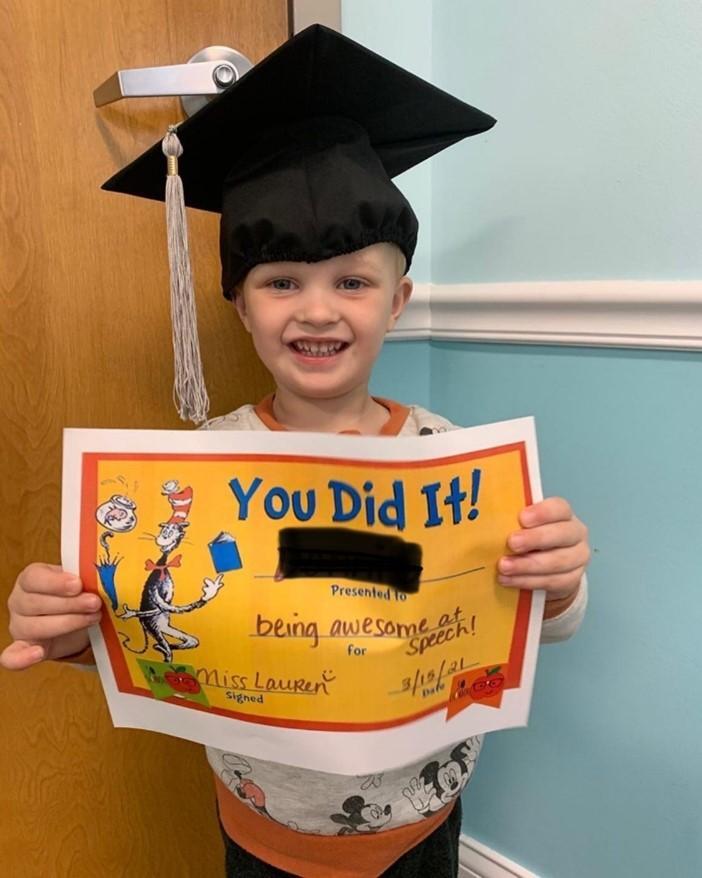

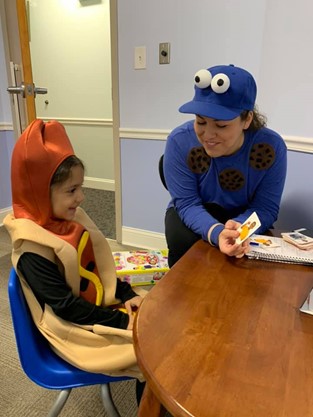
 Additionally, Speech therapy assists child learn the ability to appropriately produce speech sounds; socialize with peers; and safely chew and swallow foods. While SLP’s may work on a vast array of skills, one common goal is unanimous: enhancing communication to improve quality of life! SLPs persist in honoring this goal as their most significant career-related purpose.
Here are some activities you may see our SLPs working on in and around our clinic:
- Utilizing representational picture cues to help a child understand and communicate
- Singing songs to increase engagement and promote language
- Using bubbles, cars and other toys to help young ones engage, anticipate and respond
- Using board games in conjunction with speech production activities to make articulation drills fun
- Helping a child use appropriate social skills to engage with other children in the clinic
- Working on straw drinking, open cup drinking, and appropriate biting and chewing to improve oral motor skills for safe consumption of solids and liquids
Here’s a general overview of common speech milestones and variations in children with delayed milestones:
1. Pre-verbal (0-12 months):
- Typically Developing: Babies start cooing, babbling, making eye contact, and responding to sounds. They begin to imitate simple sounds and gestures.
- Children with Delayed Milestones: Some may have delays in cooing or babbling and may not engage in frequent social communication behaviors like making eye contact, responding to their name, or smiling back at others. They may also have reduced use of gestures like pointing or waving.
2. Early Verbal (12-24 months):
- Typically Developing: By 12 months, most babies start using simple words like “mama” or “dada” and begin to understand basic language. By 18-24 months, they begin combining two words to form short phrases like “more juice” or “big truck.”
- Children with Delayed Milestones: Many children with delayed milestones at this stage may not have significant words or may show limited use of words. They may have delayed language development and might rely more on gestures or non-verbal communication rather than spoken language. Some may engage in echolalia (repeating words or phrases they hear), which can be either immediate or delayed.
3. Expanding Language (2-3 years):
- Typically Developing: Children start using simple two- to three-word sentences and expand their vocabulary. They begin to use language for various purposes, like requesting, commenting, and asking questions. Their social use of language increases, and they can engage in basic back-and-forth conversations.
- Children with Delayed Milestones: Many children with delayed milestones may still be working on basic speech and may not use language for social interaction. They might have limited or repetitive speech and might not use language to communicate needs or emotions in a typical way. Some children may start to show delayed speech or may develop language at a slower pace compared to their peers.
4. Preschool Age (3-5 years):
- Typically Developing: By 3 years old, most children can form simple sentences and engage in conversations, though their speech may still be grammatically imperfect. By 5 years old, they typically use more complex sentences, understand and follow more advanced instructions, and can tell stories or describe events.
- Children with Delayed Milestones: Children with delayed milestones may continue to show delays in social communication. They may struggle with conversation, using language in a functional way, or understanding social cues like tone of voice or facial expressions. Pragmatic language skills (how language is used in social contexts) may be a major area of difficulty. Some children may have more advanced language skills but struggle with social reciprocity, such as taking turns in conversation or understanding jokes or figurative language.
5. School Age (5+ years):
- Typically Developing: By the age of 5, children typically have a larger vocabulary and can express their thoughts and ideas more clearly. They can follow multi-step directions, use appropriate grammar, and engage in detailed conversations. By 7 or 8, they may start to read and write, further expanding their language use.
- Children with Delayed Milestones: Some children with delayed milestones may have relatively strong vocabulary and sentence structure, but they might still struggle with conversation skills, including asking questions, staying on topic, or using non-literal language (like metaphors or sarcasm). Many children with delayed milestones may benefit from support in pragmatic language skills. For example, they might need help understanding social cues (like body language and facial expressions) and using language flexibly across different contexts.
Challenges and Variations in Speech Development for Children with Autism:
- Delayed Onset of Speech: Many children with autism experience delays in the onset of speech, some may not speak at all, or they may speak very little for a longer period. Early intervention can significantly help in these cases.
- Echolalia: A common feature in younger children with autism is echolalia, where they repeat phrases or words they’ve heard. This can be immediate (repeating words right after hearing them) or delayed (repeating words at a later time). While echolalia can seem like language regression, it’s often a phase of learning language, especially in nonverbal children.
- Limited Use of Language for Social Communication: Some children with autism may have difficulty using language to interact with others. They might not initiate conversations, have trouble understanding or maintaining a conversation, or fail to use language to express emotions and needs.
- Monotone or Unusual Tone of Voice: A child with autism may speak in a flat, monotone voice, or use an unusual tone that doesn’t match the social context of the conversation.
- Vocabulary and Sentence Structure: Some children with autism may have a rich vocabulary and advanced sentence structure but still struggle with the social aspects of communication. They may be able to describe events in detail but have difficulty participating in reciprocal conversation.
Intervention and Support:
Early speech therapy is crucial for children with delayed milestones, as it can help them develop functional language skills and improve communication. Speech therapists often use strategies tailored to each child’s needs, which might include:
- Social Stories: These are simple stories that describe social situations to help children understand how to behave or respond in social contexts.
- Augmentative and Alternative Communication (AAC): Some children may benefit from using AAC systems (like communication devices or picture boards) to support communication, especially if they are nonverbal or have limited speech.
- Play-based therapy: This helps children develop social communication and language skills through structured or unstructured play with peers or adults.
Each child with delayed milestones is unique, so speech milestones can vary greatly. The most important thing is to observe the child’s progress and provide targeted support as early as possible to address any areas of concern.