

Our Mealtime Buddies Program is designed for preschool and school-aged children who experience challenges with eating, including children who eat a limited variety of foods, avoid entire food groups, struggle with new foods or textures, or have feeding differences that impact nutrition, hydration, or family mealtimes.
At Children’s Therapy Connections, we recognize that feeding challenges are often about much more than “picky eating.” A child’s sensory system, oral motor skills, past experiences, anxiety, medical history, and developmental profile can all influence how they experience food. What may appear to be refusal, avoidance, or challenging behavior is often a child’s way of communicating discomfort, uncertainty, or sensory overwhelm rather than a lack of willingness to learn.
Our licensed speech-language pathologists and occupational therapy practitioners use evidence-based feeding interventions combined with neuro-affirming, relationship-based practices that respect each child’s individual sensory and developmental needs. Rather than focusing on compliance or pressure to eat, we help children build trust, confidence, body awareness, and positive experiences with food.
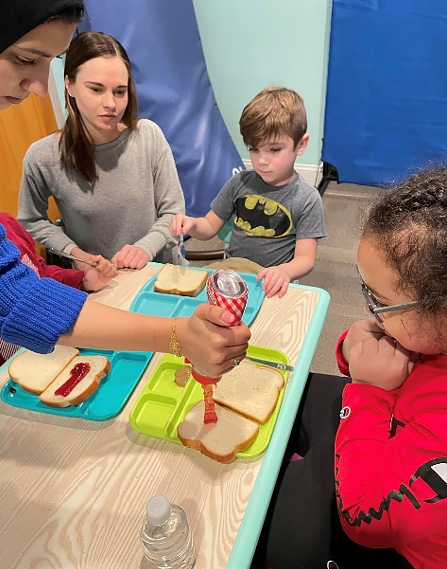
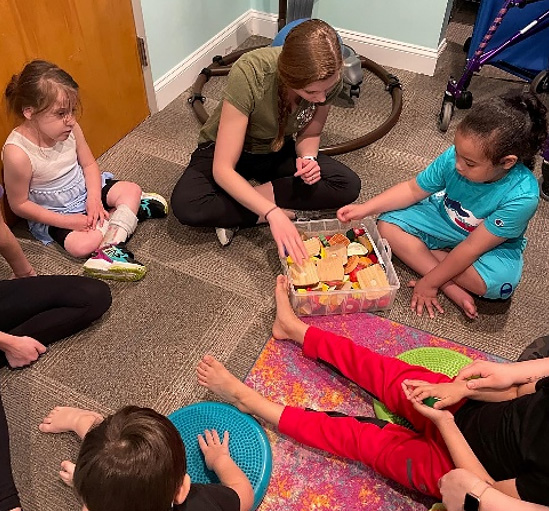
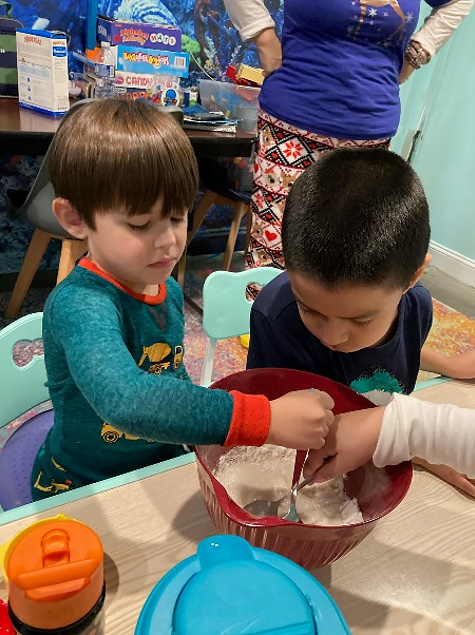
We believe that meaningful progress happens when children feel safe. Through child-led exploration and carefully supported experiences, children are encouraged to interact with food in ways that feel manageable for them. This may include looking at, touching, smelling, playing with, or tasting foods as they gradually move through the stages of food learning at their own pace. We celebrate every step forward, recognizing that food acceptance is a process, not a single event.
Mealtime Buddies may benefit children who:
- Have a limited variety of accepted foods
- Avoid specific foods, textures, temperatures, or food groups
- Have sensory sensitivities that impact eating
- Experience anxiety or distress around mealtimes
- Have difficulty transitioning between food textures (such as purees to solids)
- Have difficulty trying or accepting new foods
- Have challenges maintaining adequate nutrition or hydration with their current diet
- Are transitioning to oral eating or reducing dependence on tube feeding
- Experience oral motor or feeding skill delays
Groups are thoughtfully formed based on age, developmental level, and feeding abilities. Peer models may be incorporated when appropriate to provide natural opportunities for observation, social learning, and positive food experiences.
Before food is introduced, children participate in sensory-regulating activities designed to support nervous system regulation, body awareness, and readiness for learning. Sessions also incorporate age-appropriate mealtime routines such as handwashing, sitting together at a family-style table, using cups and utensils, and participating in positive social interactions during meals.
A key component of our program is parent collaboration. Families receive ongoing coaching, education, and practical strategies that can be implemented at home. Consistency between therapy sessions and home mealtimes often plays an important role in helping children generalize new skills and build lasting confidence with food.
Most importantly, Mealtime Buddies provides a safe, supportive, and enjoyable environment where children can develop a healthier relationship with food, connect with peers, and discover that trying new foods can be a positive and empowering experience. With patience, understanding, and consistent support both in therapy and at home, meaningful progress is possible.